
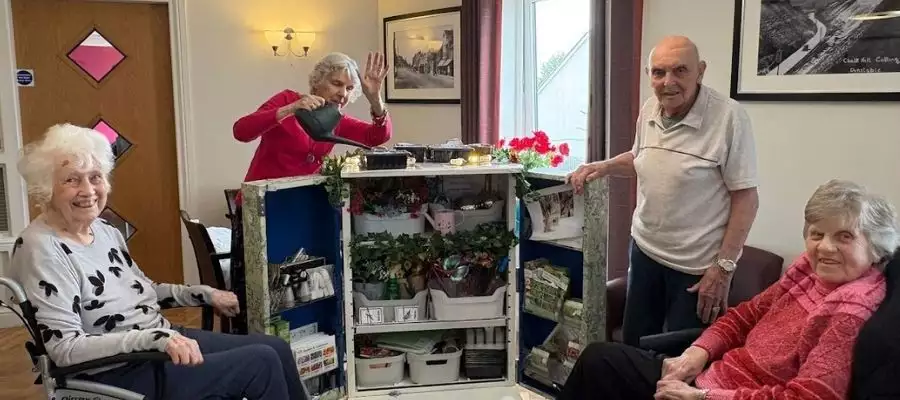
Residents at Caddington Grove Care Home in Dunstable are enjoying the benefits of gardening, sensory experiences and time spent outdoors through a specially designed wellbeing garden.
The London Road care home has entered its garden into the Dunstable in Bloom competition, celebrating the creativity and dedication of residents who help care for the space throughout the year.
Alongside colourful planting displays, the garden has been designed to support wellbeing through sensory stimulation, reminiscence and meaningful daily activity.
Resident Jack Hart, aged 79, said: “I enjoy being in the garden because it gives me a real sense of purpose.
“It gets me active, which is so important, but at the same time it’s incredibly peaceful. It’s one of the highlights of my day.”
The sensory garden at Caddington Grove has been created around four key elements: scent and memory, touch and texture, colour and visual stimulation, and edible planting.
Each section encourages residents to engage with nature in different ways, from brushing herbs to release familiar fragrances, to handling different plants and materials, noticing seasonal colours or enjoying edible plants as they grow.
These simple moments can support conversation, relaxation and connection, while giving residents the chance to take part in familiar outdoor activities in a safe and accessible way.
Home Manager Emma Burns said the project is rooted in ecotherapy principles, which focus on the positive impact that nature can have on mental and emotional wellbeing.
Emma said: “We’ve seen residents becoming visibly calmer and more relaxed when they spend time engaging with the garden, whether that’s outside among the flower beds or indoors with the trolley.
“It’s not just about gardening, it’s about creating meaningful moments. People start conversations more naturally, they reminisce about their own gardens or past hobbies, and there’s a renewed sense of connection.”
To help more residents enjoy the benefits of nature, the home has also introduced a mobile garden trolley.
The trolley allows flowers, herbs, textures and planting activities to be brought indoors, making gardening accessible for residents who may not always be able to spend time outside.
Emma added: “The trolley brings the garden directly to them, which has opened up so many opportunities for one-to-one engagement.
“Residents can take their time exploring flowers, textures and scents, planting seeds or arranging cuttings. You can really see the enjoyment on their faces, and that sense of inclusion is incredibly important.”